Product overview
Details that help confirm the fit.
The Oil Burner Ignition Electrode is a ceramic-insulated high-voltage component designed to ignite atomised fuel in compatible pressure-jet oil burners.
During the burner start-up sequence, the ignition transformer supplies high voltage to the electrode. A spark is produced between the electrode tip and a second electrode or grounded burner component, igniting the fuel-and-air mixture inside the combustion head.
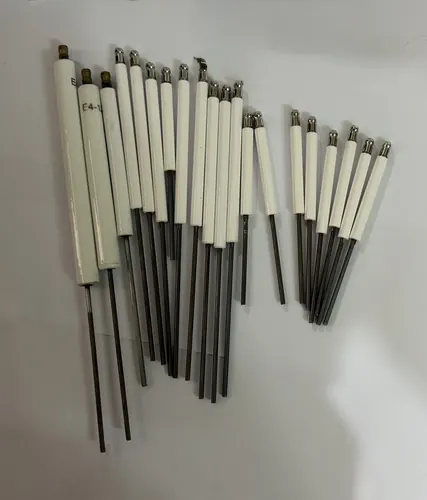
The white ceramic sleeve electrically insulates the internal metal conductor from the burner body. The ceramic construction also provides resistance to the elevated temperatures present around the burner combustion head.
The exposed metal electrode rod positions the ignition tip close to the fuel nozzle and diffuser plate. Correct positioning helps provide a strong, consistent spark without allowing the electrode to contact the nozzle, diffuser plate or other burner components.
A metal terminal at the upper end provides the connection for the high-voltage ignition cable. Secure cable engagement is essential for reliable spark transmission and safe burner operation.
The electrodes are available in multiple lengths and configurations to suit different combustion-head designs. The replacement electrode must match the original ceramic length, rod length, terminal style, mounting arrangement and ignition-tip position.
Typical applications include LDO, diesel, kerosene and light-fuel-oil burners installed on heating boilers, steam boilers, hot-water boilers, oil-fired furnaces, industrial ovens, hot-air generators and thermic-fluid heaters.
Cracked ceramic insulation, carbon tracking, corroded terminals, eroded electrode tips or incorrect positioning can cause weak sparking, delayed ignition and burner lockout. Routine inspection and cleaning help maintain dependable ignition performance.
Model, voltage, rotation, pressure range and mounting can vary. Final compatibility is confirmed against the nameplate or existing component.